Behind the Lofoten Long Trail
The planning and realities behind the Lofoten Long Trail
Every journey starts long before the first step.
Why Lofoten
We were looking for a long-distance route that would feel remote and self-supported.
Somewhere not too hot, quiet, and wild.
A place where we could move slowly through the beatiful landscape for two weeks, carrying everything on our backs.
Lofoten offered exactly that:
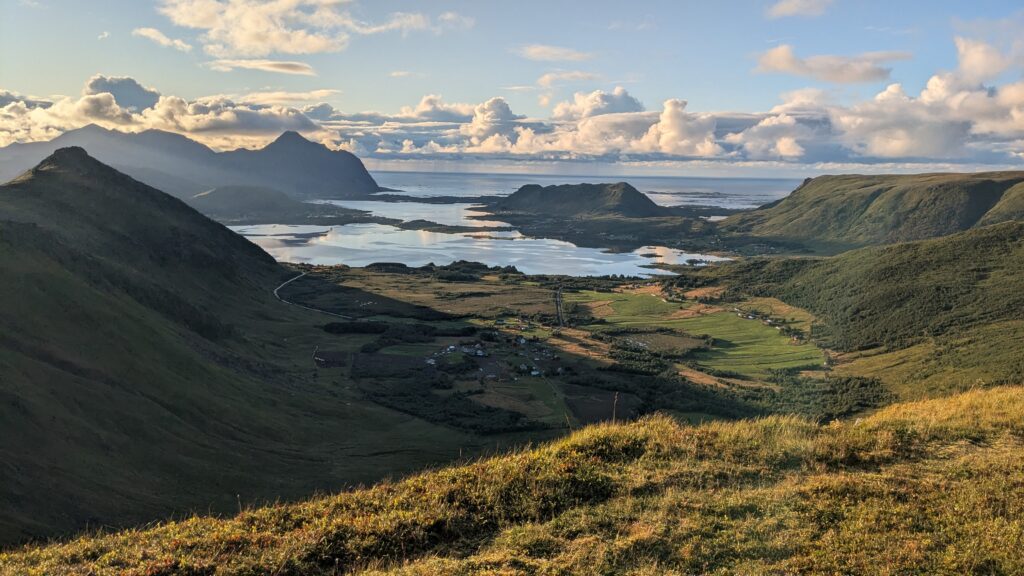
mountains rising straight from the sea, exposed ridges, unpredictable weather, and endless possibilities for wild camping.
We first found a film about a crossing through the islands, then started reading trail descriptions.
That was enough.
Getting there and back
We flew through Oslo to Bodø, then continued on a small propeller plane to Svolvær.
From Svolvær, we still had to reach the actual start of the trail on the northern side of Austvågøya.
At that point, we weren’t entirely sure how we would get there. In summer, buses only run along the main roads. We planned to cover the remaining distance by hitchhiking or, if necessary, on foot.
See more in Lofoten Long Trail – day by day, Day-0.
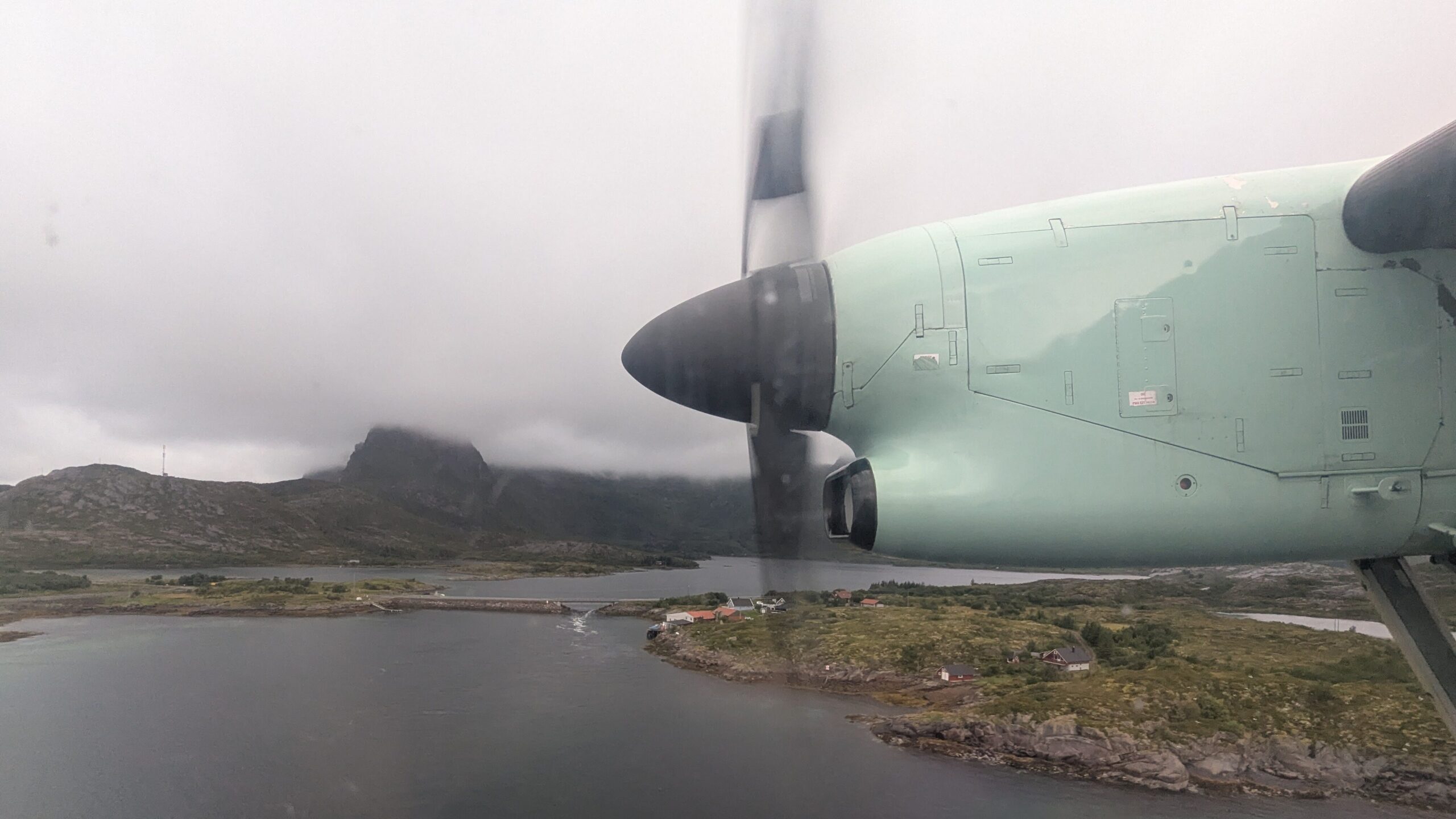
Two weeks later, the trail ended in Moskenes. From there, we took a ferry back to Bodø (free of charge for pedestrians) before flying to Oslo the following day.
Planning the route
We planned the route day by day using mapy.com and satellite view.
The initial idea was simple:
walk between 15 and 20 kilometers per day, with full backpacks.
In reality, distance meant very little in Lofoten. Terrain, weather exposure, elevation, and campsite possibilities mattered much more.
Before every stage, we tried to identify:
- possible water access
- tent spots
- resupply options (shops, petrol stations, cafes)
- road sections, tunnels and bridges
- difficult terrain
Some places looked perfect on the map and completely different in reality. See more in Lofoten Long Trail – day by day, Day 3.
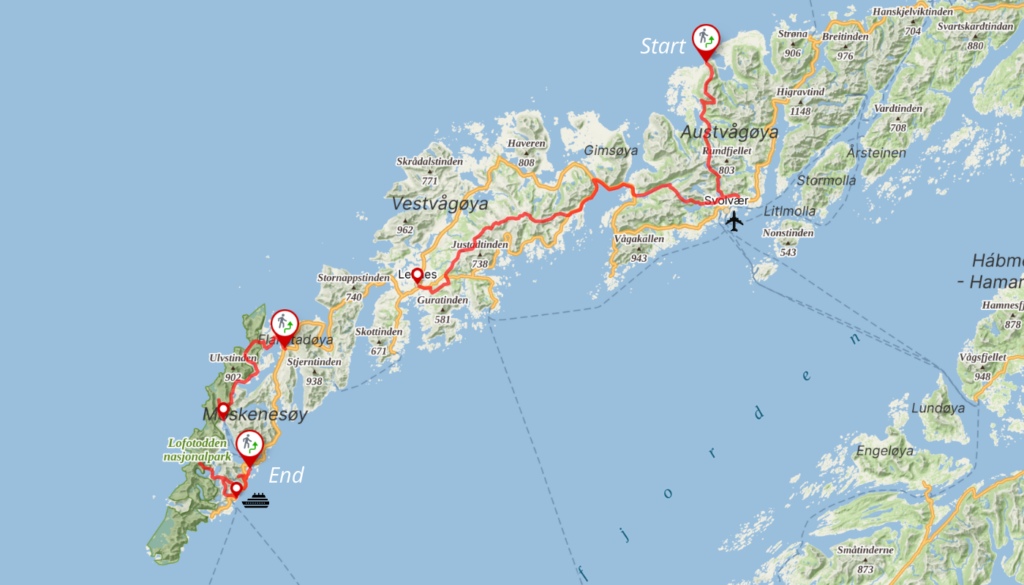
Because of the infrastructure, we had to split the trek into three stages:
stage I — bus transfer — stage II — ferry crossing — stage III.
One of the sections where walking wasn’t possible was the Nappstraumen tunnel connecting Flakstadøya and Vestvågøya, where we had to take a bus.
Later, near Moskenes, we also had to take a ferry to continue towards Reine.
What was supposed to be a wilderness crossing became a constant combination of nature and logistics.
And eventually, that became part of the experience itself.
Here is the full route we actually hiked through the Lofoten Islands.
Food, water & resupply
Food and water planning became part of the daily routine.
We carried freeze-dried dinners for 11 days and breakfast supplies for around 5 days.
The rest had to be bought gradually along the route, in towns.
The main resupply points were:
Svolvær, Leknes, and Reine.
Gas canisters were easiest to find at petrol stations and outdoor stores.
One particularly memorable stop was Rebecca Cafe, where warm food and coffee briefly interrupted the rhythm of trail life.
Water was available frequently across most of the route, through streams and lakes.
Sometimes there was a lake on one side of the trail and a fjord on the other, so we had to pay attention to collect fresh water from the lake, not salt water from the fjord.
There were two campsites with no water source at all, where we had to carry extra water for cooking (3 liters per person):
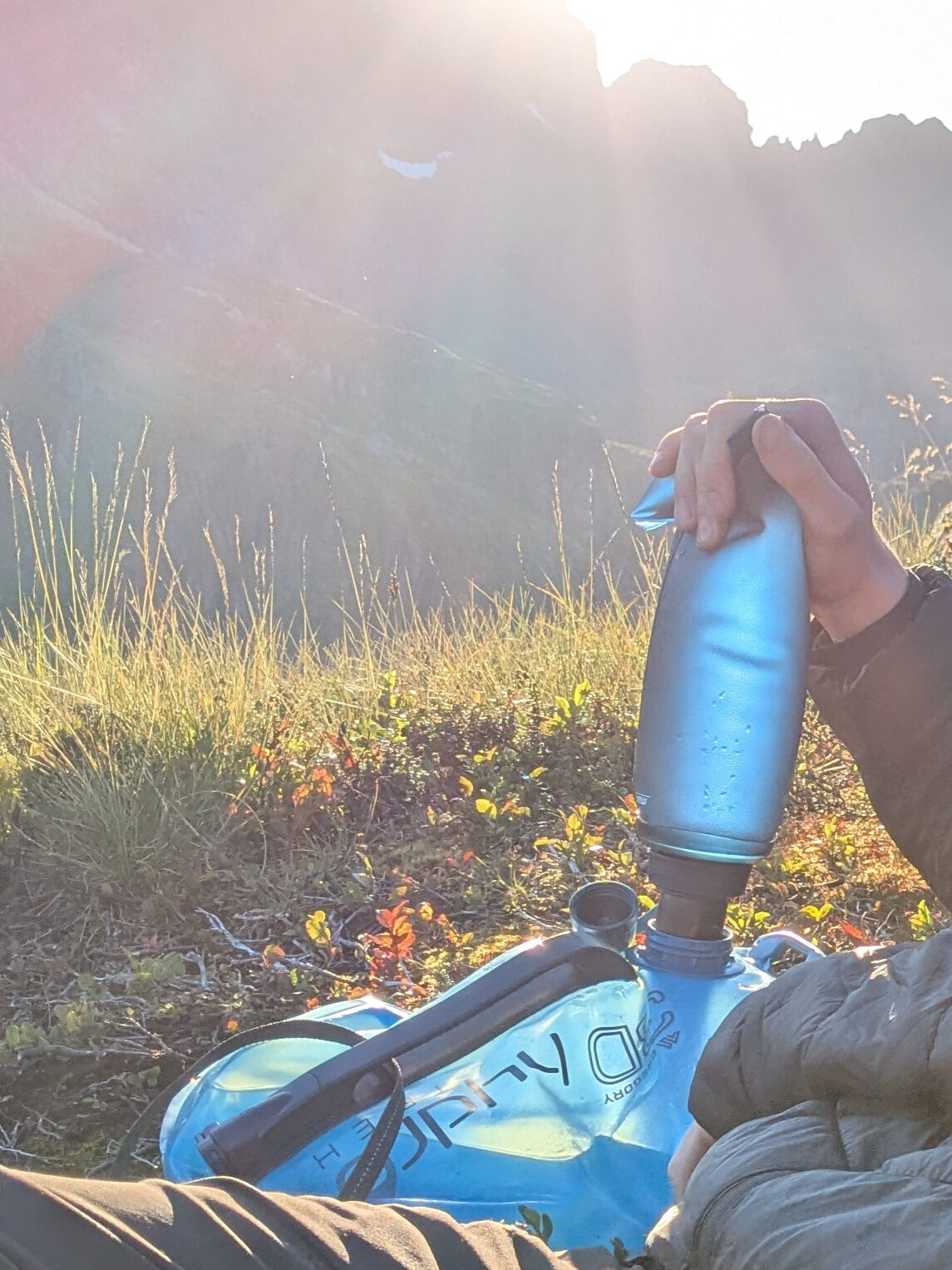
We always filtered water.
Check out our water setup – filters and daily carry.
Wet terrain
The biggest challenge was not the distance.
It was wet feet.
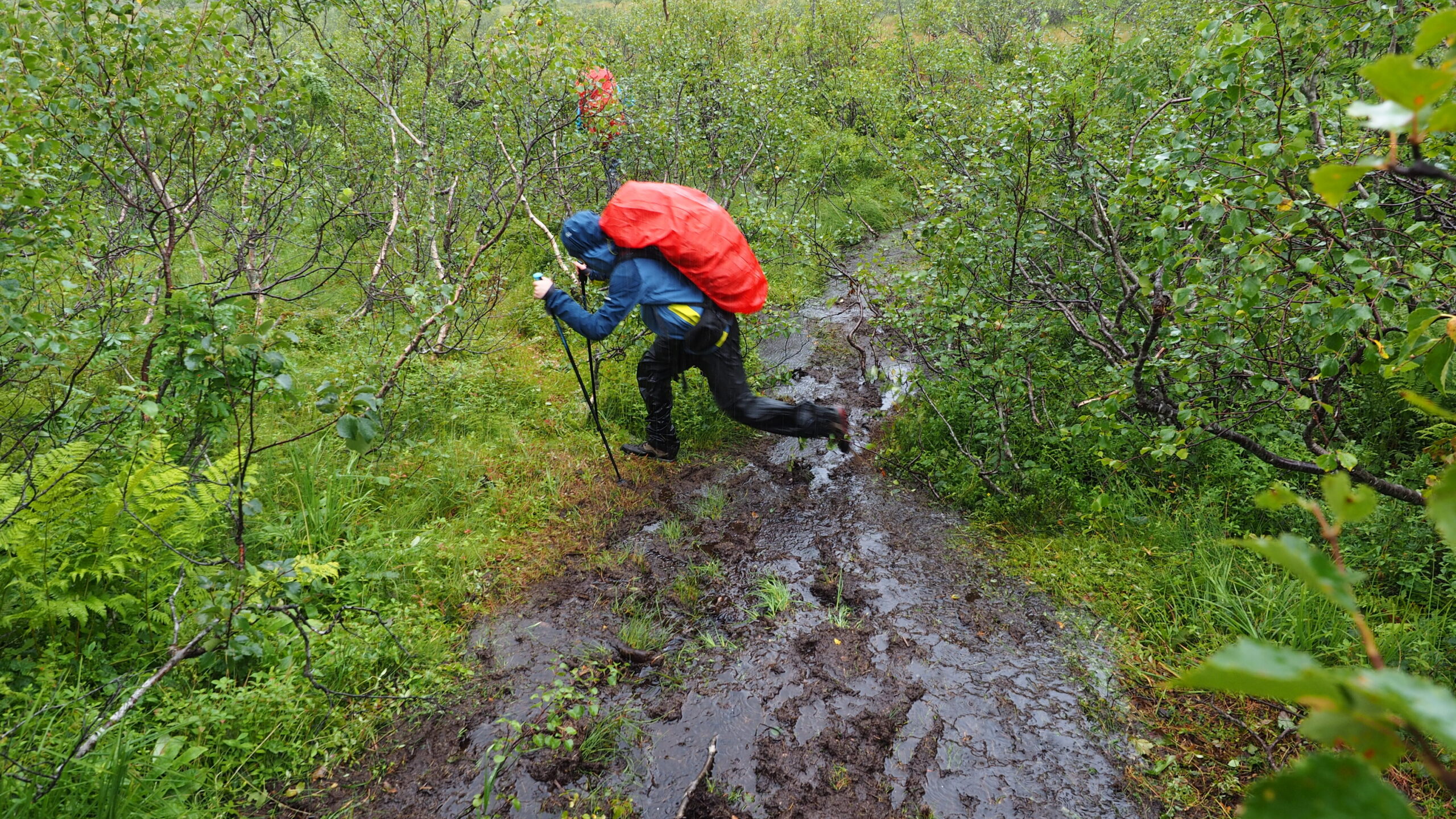
Especially in the eastern and central parts of Lofoten, the terrain was often marshy, boggy, and permanently soaked.
The trail regularly disappeared into mud, streams, wet grass, and waterlogged ground.
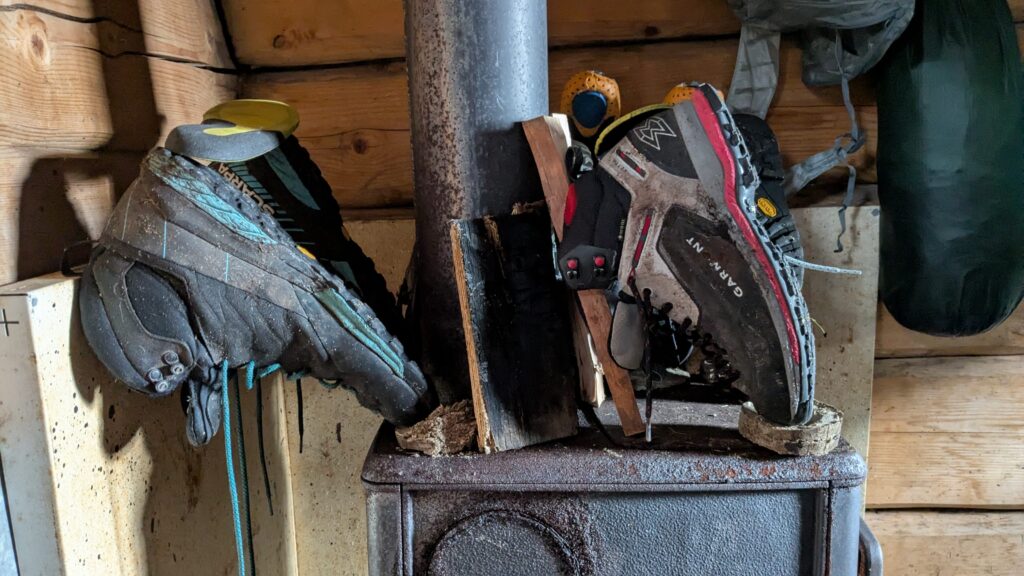
Our shoes stayed wet most of the time.
Not only because of rain – but because the terrain itself was constantly saturated with water.
That changed the trekking rhythm completely.
We were looking for opportunities to dry our gear, so we gladly used the campsite in Svolvær (Day 2), the cabin at Nøkkvatnet (Days 3 & 4), and an apartment in Leknes (Days 7 & 8) to properly dry everything.
Everything that absolutely had to stay dry – especially sleeping bags – was protected inside waterproof dry bags. Once gear becomes wet for several days in a row, drying it becomes difficult.
Weather & conditions
August is considered one of the better months for hiking in Lofoten.
At least in theory.
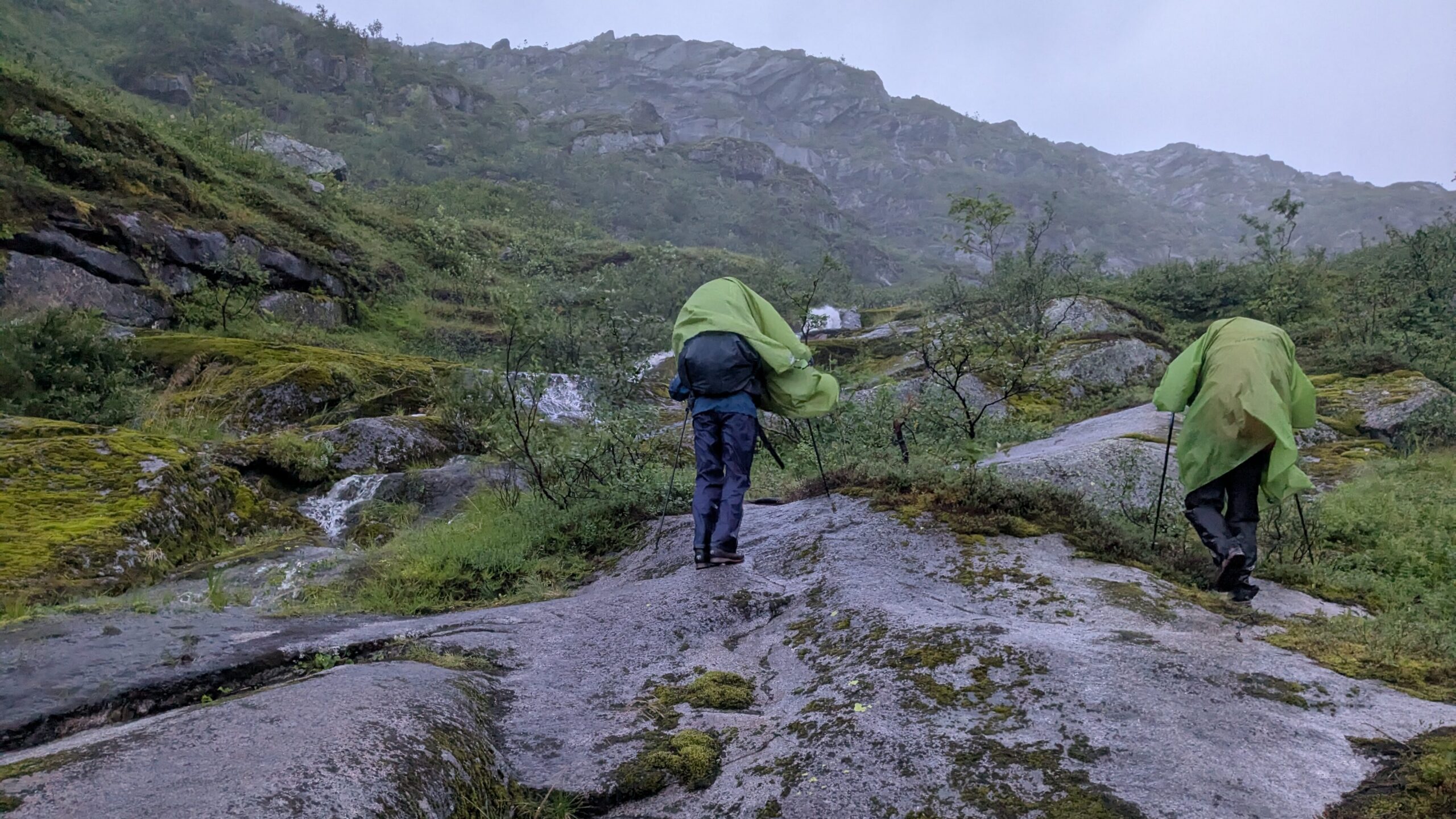
Just before departure, the YR forecast showed almost two weeks of rain.
We went anyway.
The weather shaped almost every decision on the trail:
where to stop, where to camp, how far to walk, and when to slow down.
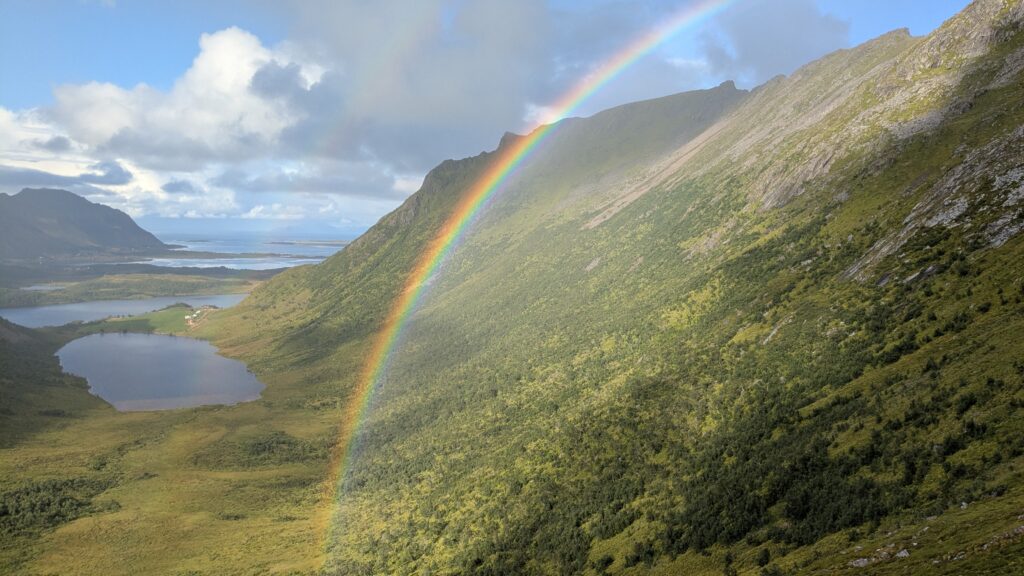
Rain, wind, low clouds, and short moments of sun constantly replaced one another.
Sometimes several times within a single hour.
Weather forecasts became part of everyday life.
Checked in the morning, during breaks, and again inside the tent in the evening.
The conditions were unpredictable, but after some time, that unpredictability itself became part of the rhythm.
Daily life on the trail
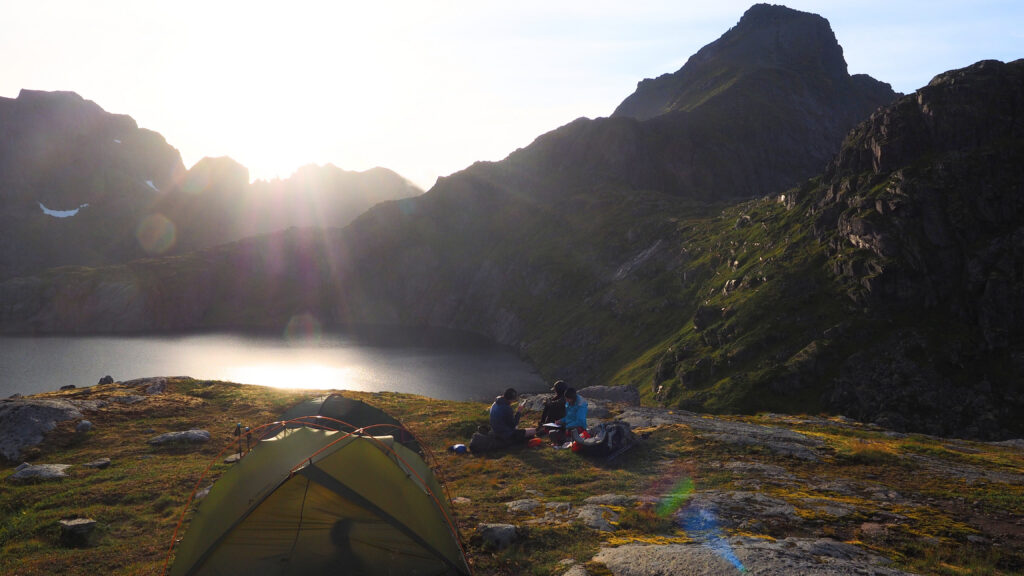
After a few days, life became surprisingly simple.
Wake up.
Boil water and eat breakfast.
Pack the tent.
Walk.
Breakfast was usually oatmeal, sometimes with berries found around the campsite.
Most days revolved around movement:
crossing ridges, navigating wet ground, looking for water, checking weather, searching for a campsite before evening.
At the end of the day, small things mattered most:
a flat place for the tent, warm meal, dry socks.
Nothing complicated.
Just the same routine repeated day after day across the islands.
Budget & practical costs
Norway is expensive, but wild camping helped keep many costs under control.
Approximate costs of our two-week self-supported trek for four people:
| Cost category | Approx. cost |
|---|---|
| Food & gas in Norway | ~ € 1,500 |
| Accommodation (4 nights indoors & campsite) | ~ € 930 |
| Flight Bodø → Svolvær (ferry back to Bodo free of charge) | ~ € 280 |
| Bus & local ferry transport between islands | ~ € 150 |
| Other expenses | ~ € 50 |
| Total | ~ € 4,300 |
Most nights were spent wild camping. Accommodation costs include 4 nights indoors used mainly for drying gear and recovery.
The total cost does not include international flights to Bodø or trekking gear and freeze-dried meals bought before the trip.
Planning gives a sense of control.
But once you’re out there, things don’t always go as expected.
And that’s part of the journey.
Check out our full gear setup and everything we carried on Lofoten Long Trail.