What we carried on the Lofoten Long Trail
Four people – us (Aga & Tomek) and our sons, Mateusz (18) and Karol (16).
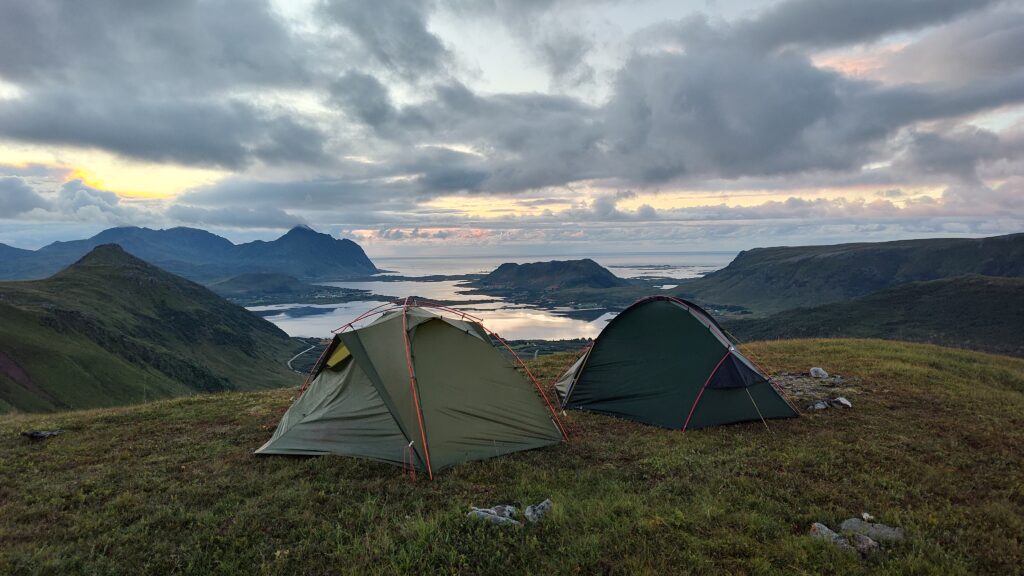
Two tents.
Fourteen days on the trail.
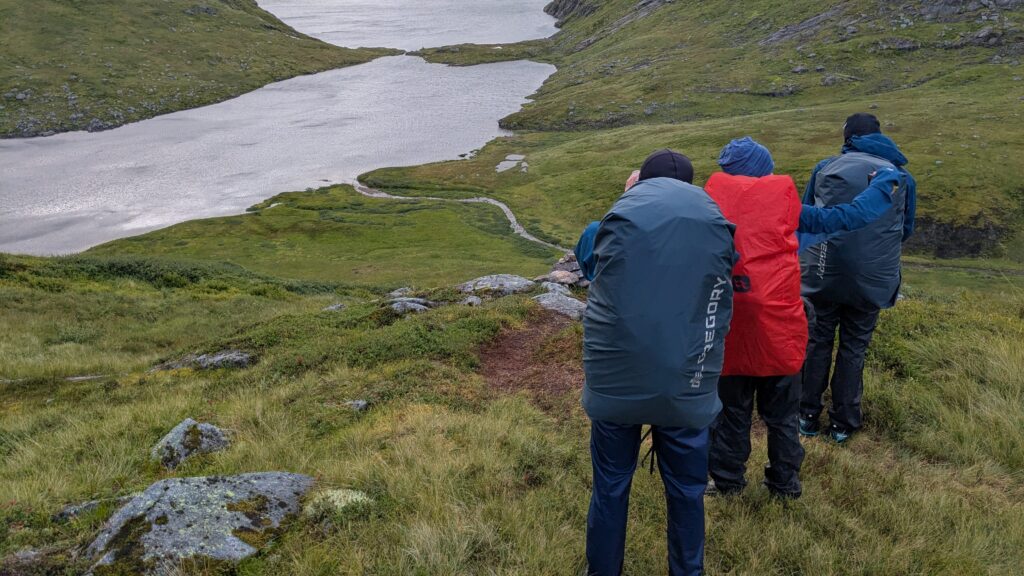
The conditions changed constantly: rain, wind, wet terrain, rocky sections, muddy trails and long days with heavy backpacks. That’s why we tried to balance comfort, safety and weight – not ultralight, but practical and reliable for two weeks in unpredictable weather.
In the sections below, you’ll find the gear setup we used during our self-supported Lofoten Long Crossing.
Quick Stats
| Person | Starting Pack Weight |
|---|---|
| Aga | 12 kg |
| Tomek | 20 kg |
| Mateusz (18) | 17.5 kg |
| Karol (16) | 13 kg |
Our Gear Setup on the Lofoten Long Trail
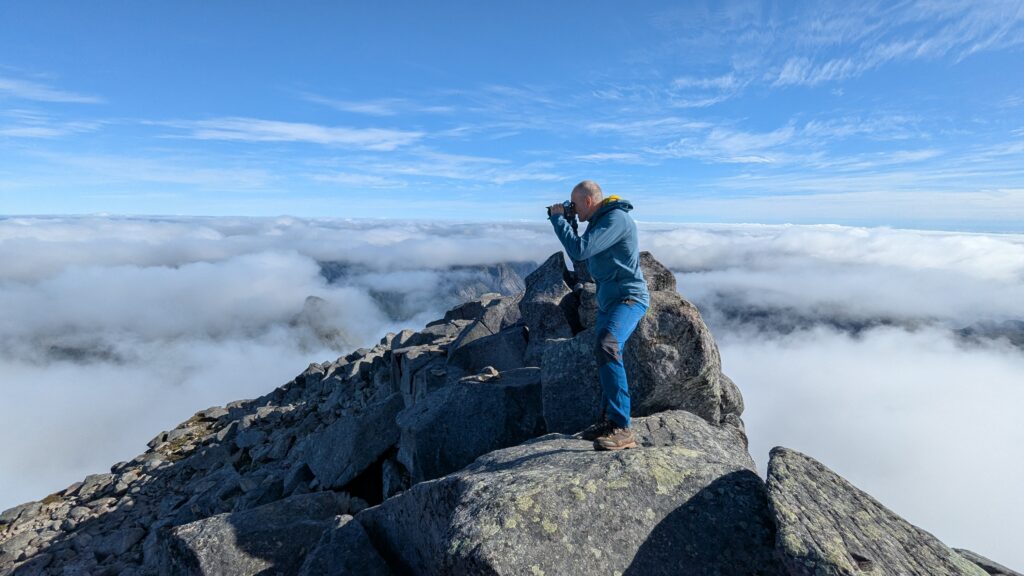
Shared trek setup
- 2 tents
- cooking system
- camera gear
How we distributed the weight
We tried to keep backpack weight within reasonable limits:
- max. 1/3 of body weight for men,
- max. 1/5 of body weight for women.
Tomek carried most of the shared gear and additional food and water.
Mateusz carried the second tent and some extra supplies.
Everyone carried their own clothing, sleeping gear, food and water.
Weight Distribution by Category (kg)
| Person | Starting Pack Weight | Packs & Sleeping System | Clothing & Hygiene | Kitchen | Electronics & Camera | Food & Water |
|---|---|---|---|---|---|---|
| Aga | 12 | 4.5 | 3 | – | 0.5 | 4 |
| Tomek | 20 | 7 | 4 | 1.5 | 2 | 5.5 |
| Mateusz | 17.5 | 7 | 3.5 | 0.5 | 0.5 | 6 |
| Karol | 13 | 4.5 | 3 | – | 0.5 | 5 |
SHELTER & SLEEPING SYSTEM
What we used to sleep comfortably in wet and windy conditions
Tents
Sleeping Bags
We always packed our down sleeping bags in Sea to summits dry bags, 8 L.
Keeping sleeping bags dry on Lofoten was absolutely essential.
Sleeping Mats
They turned out to be a great balance between comfort and weight.
Pillows
No trekking pillows – just insulated jackets inside sleeping bag sacks 🙂
PACKS & ORGANISATION
How we packed and organised our gear during the trek
Backpacks
Dry bags
They turned out to be one of the most important pieces of gear on the entire trek.
Lofoten is wet. Even when the rain stopped, the terrain, grass and air often stayed constantly damp.
Inside waterproof dry bags, we kept::
- sleeping bags,
- spare clothes,
- electronics and camera gear
safe throughout the trek.
Additionally, we also used backpack rain covers, although in strong rain and wind they only provided partial protection.
CLOTHING
How we dressed for cold, wet and constantly changing weather
We carried:
- waterproof jackets, ponchos and rain pants,
- insulated jackets (Rab / Regatta),
- fleece mid-layers,
- hiking t-shirts,
- long and short hiking pants,
- buffs, gloves and caps,
- spare socks and underwear,
- hiking boots,
- flip-flops for camp.
We each carried three sets of underwear and hiking t-shirts, which turned out to be a good balance between comfort and weight.
For the first time, we brought ponchos. They seemed like a good idea before the trip, but in strong coastal wind they became difficult to use and often got in the way.
Kitchen, Food & Water
How we cooked, filtered water and managed food on the trail
Cooking Setup
Stove system we used:
Not the lightest setup, but fuel-efficient, wind-resistant and quiet.
The 1-liter pot size worked well for our needs.
Compared to a Jetboil, it was slightly slower to boil water, which was probably its main downside.
We boiled water for:
- freeze-dried meals and breakfasts,
- and tea.
Titanium Kitchen Setup
We also carried:
The long spoons worked especially well with freeze-dried meal pouches.
- titanium cups.
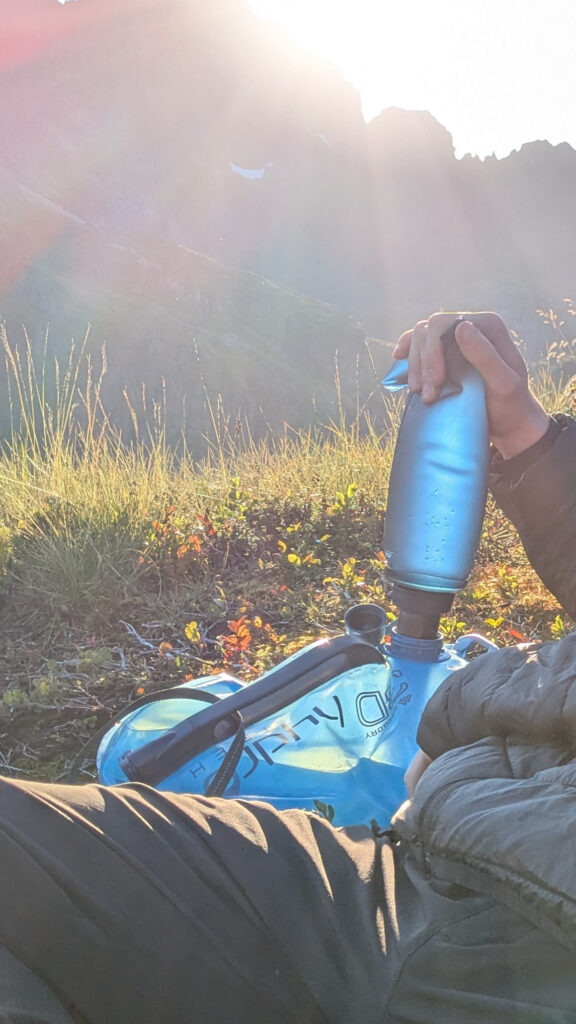
Water system
We used:
Both systems worked well and gave us flexibility during longer sections.
Even though Lofoten has many streams, we still often carried significant amounts of water depending on the route, weather campsite locations.
| Person | Water carried |
|---|---|
| Aga | 1.5 – 2 L |
| Tomek | 2 – 3 L |
| Mateusz | 2 L |
| Karol | 1.5 – 2 L |
Nevertheless, we always filtered the water we collected on the trail.
Food
- Breakfasts
Mostly freeze-dried oatmeal breakfasts, sometimes with fresh berries picked on the trail.
We carried breakfasts for the first 5 days and bought the rest along the route.
- On the Trail
Protein bars, sweets, dried fruit and nuts, and beef jerky – quick calories for long hiking days.
- Dinners
Freeze-dried meals, especially Travellunch.
We carried dinners for 11 days and bought the remaining meals along the trail.
The electronics, cameras and navigation tools we carried throughout the trek.
Camera setup
Olympus OM-D E-M1 Mark I
M.Zuiko 12–40 mm f/2.8 Pro
- spare battery,
- charger,
- PGYTech clip.
The camera gear added noticeable weight but was fully worth carrying.
Most of the photos and videos on this website were taken during the trek using this setup, while the rest
were shot on a Google Pixel 6A phone.
Power & Charging
- power banks
Nitecore
NB 10.000 carbon
- headlamps
Nitecore NU25
Princeton Tec Sync
Black Diamond Spot
- charging cables,
- wall chargers,
Even during summer, reliable power management mattered because we constantly used our devices for navigation, weather checks, taking photos and documenting the trail.
Navigation
For navigation, we mainly used a SUUNTO 9 Peak Pro watch. Before the trek, we uploaded the route from Mapy.com to the watch and followed the navigation directly from the wrist throughout most of the crossing. We also used the Mapy.com app on our phones as additional backup.
The setup worked especially well in poor visibility, pathless terrain, pouring rain and during longer sections where the route was not always obvious.