Gear we use
The gear we’ve used on the trails
We buy gear for a family of four, so every purchase matters. We aim for equipment that strikes a balance between quality, durability, and price.
Rather than chasing the lightest or most expensive ultralight gear, we choose equipment that is reliable and built to last. Many items were bought on sale, and some were purchased second-hand.
Everything you’ll find here has been used by us on real trails and tested in real conditions.
SHELTER & SLEEPING SYSTEM
Tents
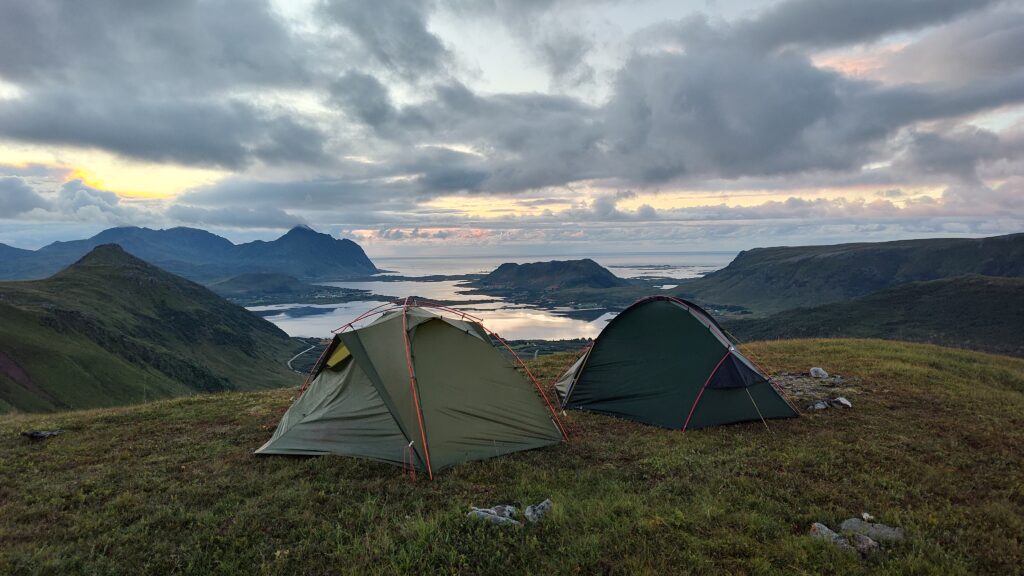
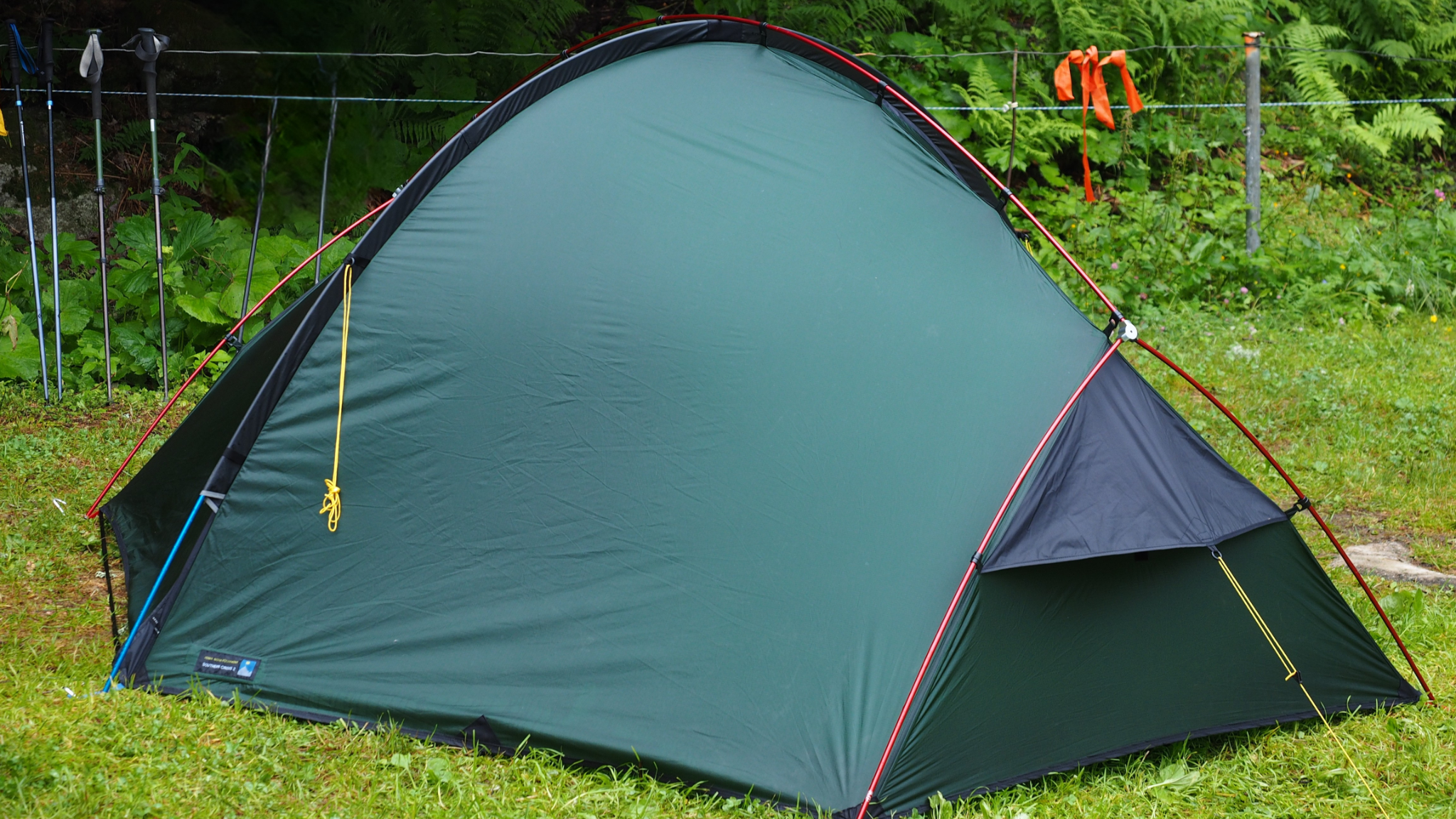
Terra Nova Southern Cross 2
Weight: 2,286 g
Light, but not ultralight.
A solid, comfortable, and reliable tent for harsh conditions.
Pros:
– excellent protection from wind and rain,
– solid inner tent with minimal mesh,
– warmer than lightweight summer tents
– comfortable for longer trips,
– entrances and vestibules on both sides,
– quick and easy to pitch, even in strong wind or rain.
Cons:
– moderate ventilation can lead to condensation in humid conditions
This is the first version of the Southern Cross 2. The newer version has improved ventilation but is also heavier.
Used on
→Lofoten Long Trail
→ Tour du Mont Blanc
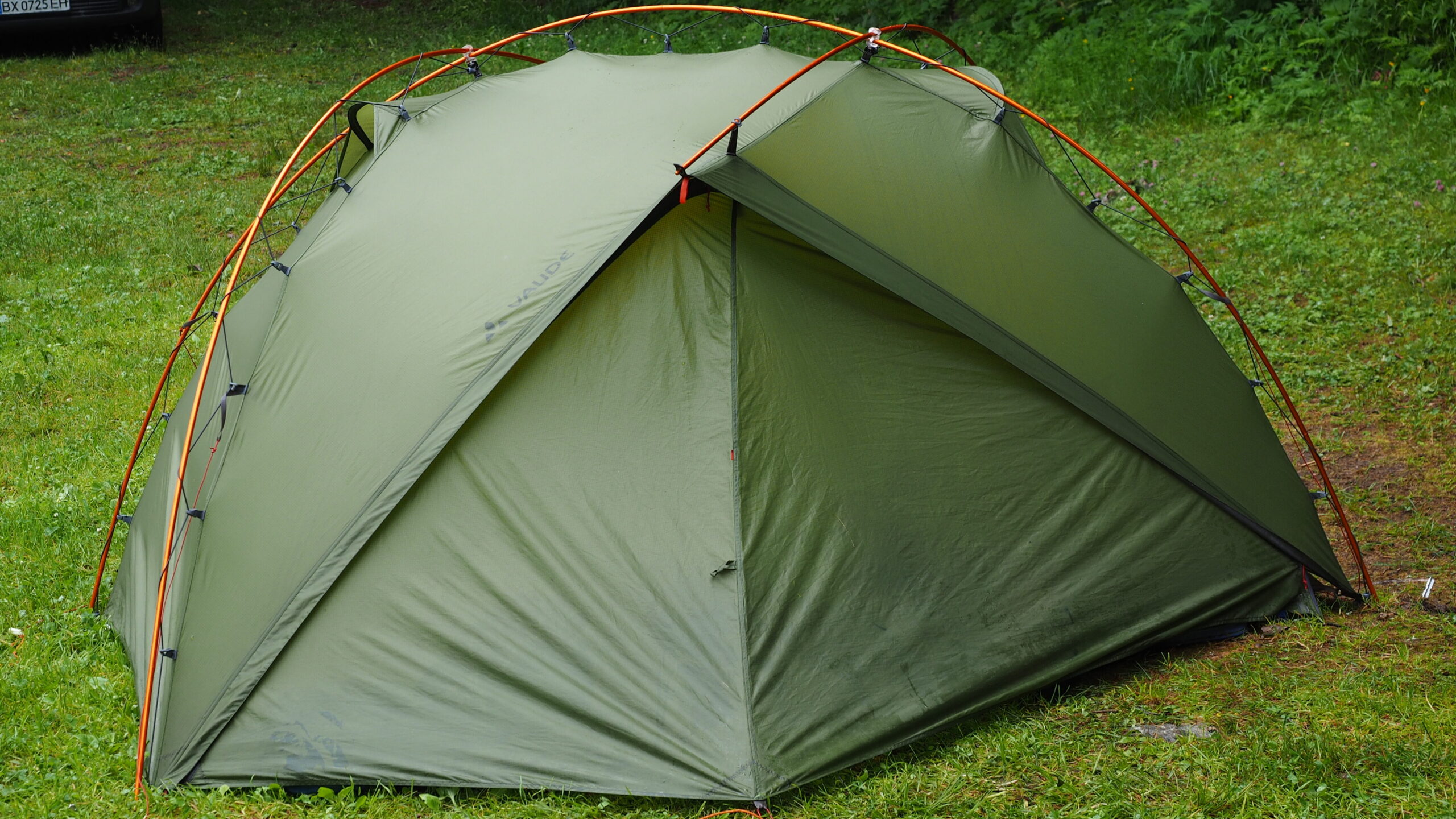
Vaude Invenio
Weight: 2,780 g
Not ultralight, but solid, comfortable, and reliable in harsh conditions.
Pros:
– excellent ventilation,
– good protection from wind and rain,
– solid inner tent with minimal mesh,
– warmer than lightweight summer tents,
– comfortable for longer trips,
– entrances and vestibules on both sides,
– spacious interior with plenty of room for two people.
Cons:
– relatively heavy.
Unfortunately, this tent is no longer in production. If you come across a used one in good condition, it’s definitely worth considering.
Used on
→Lofoten Long Trail
→ Tour du Mont Blanc
Sleeping Bags
All three sleeping bags are made in Poland and filled with high-quality Polish goose down. They offer an excellent warmth-to-weight ratio and have proven reliable on multi-day treks in a wide range of conditions.
Cumulus and Małachowski are our ultralight choices, while the Roberts offers extra comfort and durability at the expense of some additional weight.
Cumulus Panyam 450 (custom +50)
Comfort: -1°C | Limit: -7°C
Weight: 860 g
Down fill: 500 g
The best value for money.
Lightweight, warm, and highly compressible, making it an excellent choice for most three-season treks.
Used on
→Lofoten Long Trail
→ Tour du Mont Blanc
Małachowski 500 III Ultralight
Comfort: -2°C | Limit: -7°C
Weight: 700 g
Down fill: 500 g
Top-quality craftsmanship and materials.
The lightest sleeping bag we use and the easiest to compress, making it ideal when every gram and litre of pack space matters.
The shoulder area is slightly narrower than on many comparable models.
It is also the most expensive sleeping bag we own – ultralight 🙂
Used on
→Lofoten Long Trail
→ Tour du Mont Blanc
Robert’s Voyager Light 500
Comfort: -2°C | Limit: -9°C
Weight: 1000 g
Down fill: 500 g
More spacious and less restrictive than typical ultralight sleeping bags.
Slightly heavier, but very comfortable for longer trips and colder nights. Good quality craftsmanship and materials.
Used on
→Lofoten Long Trail
→ Tour du Mont Blanc
Sleeping Pads
For many years, we used self-inflating sleeping pads, Therm-a-Rest Trail Lite. More recently, we switched to the Big Agnes Rapide SL Insulated. The difference in sleeping comfort was immediately noticeable, while also reducing pack volume and weight.
When choosing a sleeping pad, one of the most important parameters is its insulation rating,
measured by the R-value:
– R 1.0–2.0: summer use, typically above 10°C (50°F),
– R 2.0–4.0: three-season use (spring to autumn),
– R 4.0–6.0: year-round use and mild winter conditions,
– R 6.0+: severe winter and extreme cold conditions.
Big Agnes Rapide SL Insulated
R-Value: 4.8
Thickness: 11 cm
Weight:
– Regular: 612 g
– Large: 670 g
(complete set: sleeping pad, pump sack and stuff sack)
We have not tested this pad in sub-zero temperatures so far.
Pros:
– exceptionally comfortable, especially for side sleepers,
– excellent warmth-to-weight ratio,
– no annoying crinkling noise during sleep,
– compact when packed,
– available in different sizes,
– suitable for three-season use and mild winter conditions,
– excellent value for money.
Used on
→Lofoten Long Trail
Therm-a-Rest Trail Lite Regular
R-Value: 3.2
Thickness: 3.8 cm
Weight: 740 g
A self-inflating sleeping pad that we used for many years before switching to the Big Agnes Rapide SL Insulated.
Pros:
– reliable and durable,
– self-inflating design,
– sufficient for most summer trekking conditions.
Cons:
– bulkier when packed,
– less comfortable than modern inflatable sleeping pads,
– heavier despite offering less sleeping comfort.
Used on
→ Tour du Mont Blanc
BACKPACKS & ORGANISATION
Backpacks
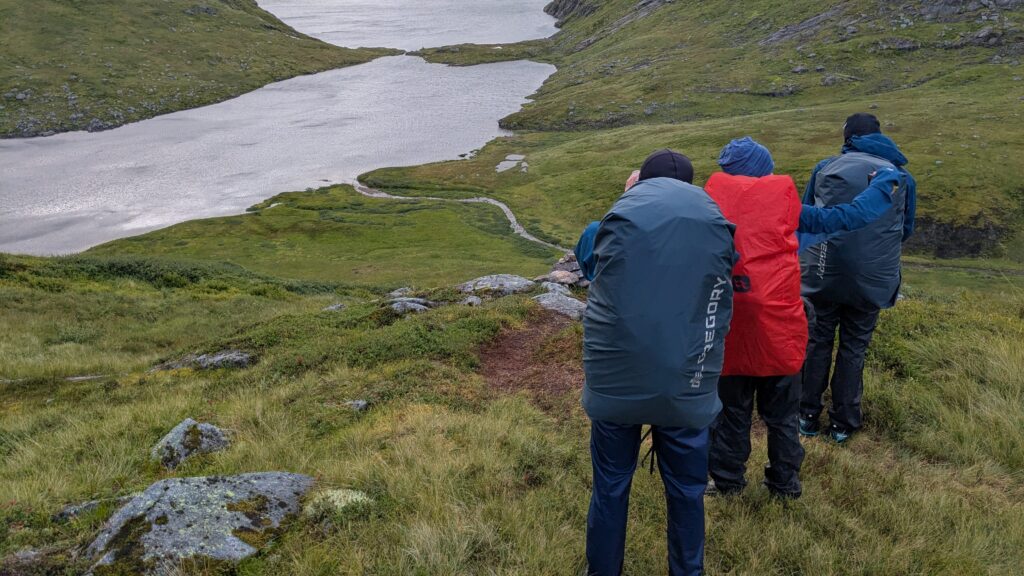
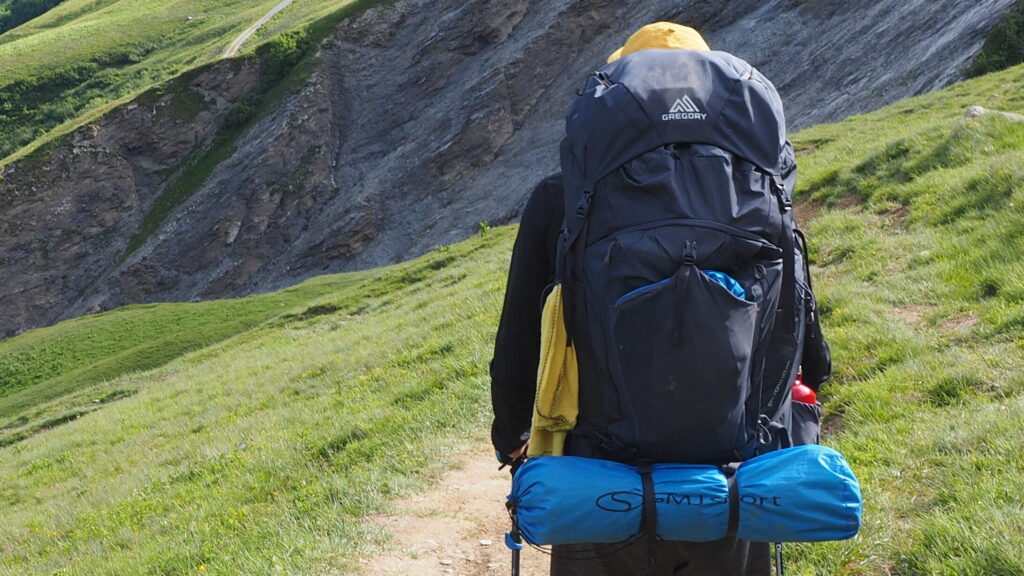
Gregory Baltoro Pro 85
Weight: 2.550 g
Max. load capacity: 35 kg
Available in sizes S, M and L
– a true workhorse for heavy loads
– very comfortable carrying system
– excellent hip belt weight transfer
– spacious hip belt pockets fitting large phones
– easy to adjust for different body heights
– durable materials and solid construction
Used on
→Lofoten Long Trail
→ Tour du Mont Blanc
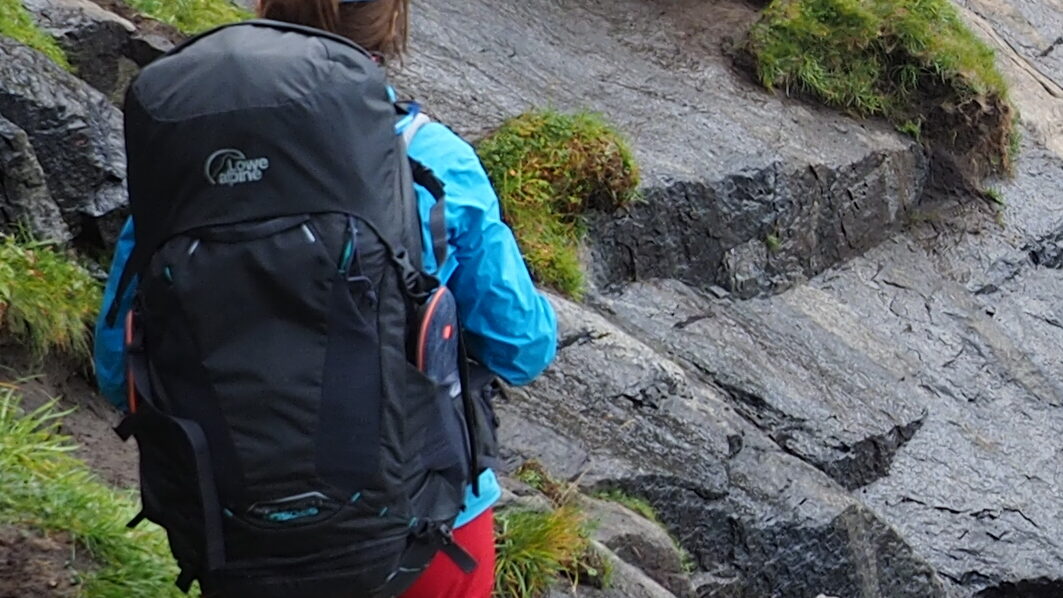
Lowe Alpin Manaslu 50-60 & 55-70
Weight: 2,250 g
Recommended load: 20–25 kg
We used the women’s 50–60 L version on the Lofoten Long Trail and the men’s 55–70 L version on Tour du Mont Blanc.
Pros:
– extremely comfortable carrying system,
– excellent weight transfer to the hips,
– easy to adjust for different body heights,
– durable materials and solid construction,
– very comfortable even when carrying heavy loads.
Cons:
– hip belt pockets are too small even for small smartphones.
The hip belt on our men’s backpack eventually failed. Lowe Alpine replaced it without any issues, which was a positive experience with their warranty service. Despite this, we still consider the Manaslu one of the most comfortable trekking backpacks we have used.
Used on
→Lofoten Long Trail
→ Tour du Mont Blanc
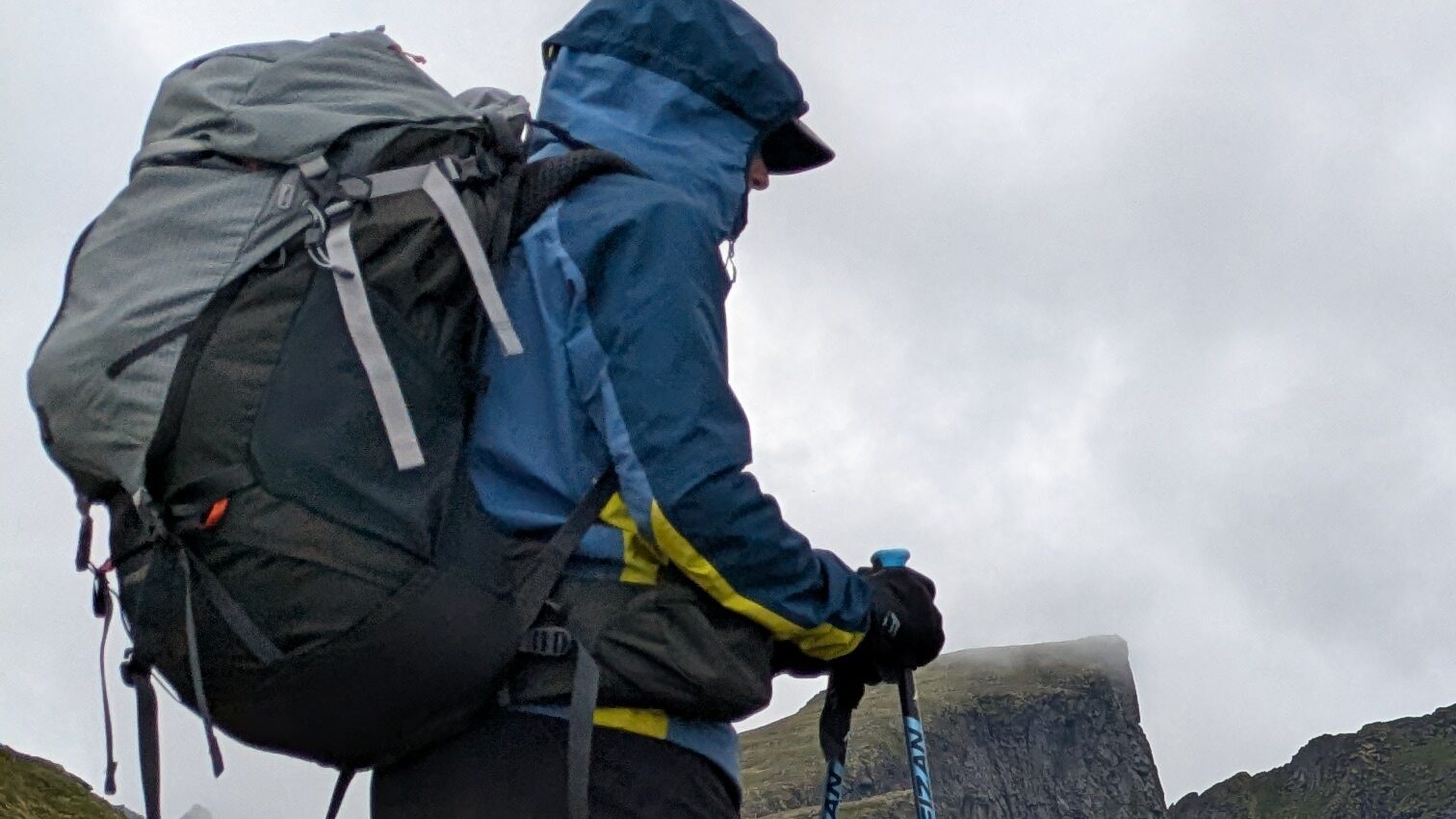
Rab Hyperon 65 L
Weight: 2,600 g
Recommended load: 20–25 kg
– comfortable carrying system
– supportive and comfortable hip belt
– lots of pockets, including a large hip belt pocket fitting a smartphone
– durable heavy-duty materials
– a solid option for long-distance trekking with heavy loads
– better suited for longer torsos
Used on
→Lofoten Long Trail
Dry bags
Sea to Summit Lightweight
Very useful pieces of gear.
Available in a range of sizes and colours – we use 8 L and 13 L versions.
Inside waterproof dry bags, we usually keep:
– sleeping bags (8L),
– spare clothes (13 L),
– electronics and camera gear (8L),
safe throughout the trek.
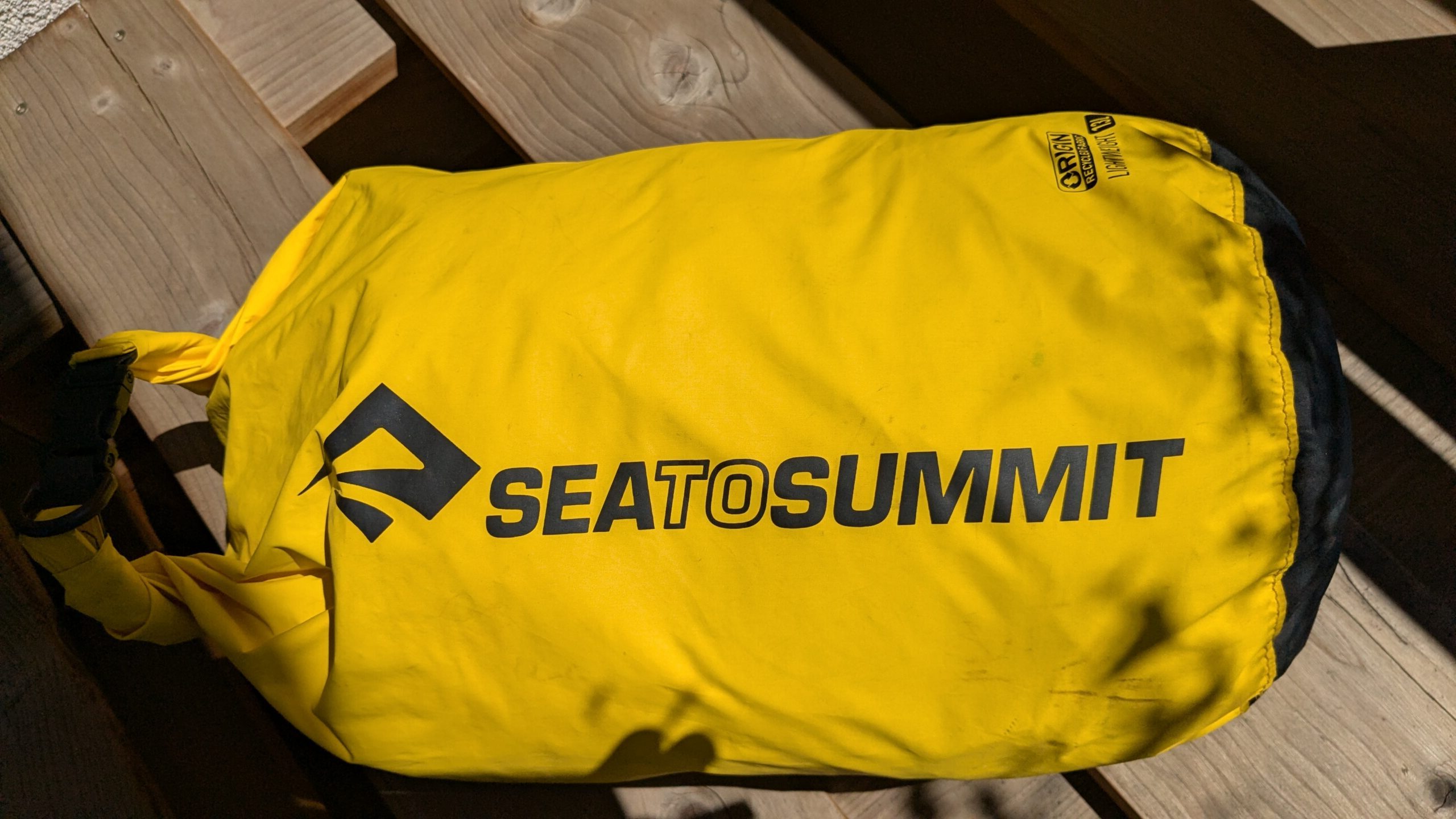
They help keep our backpacks organised and protect essential gear from rain and moisture.
Used on
→Lofoten Long Trail
→ Tour du Mont Blanc
Kitchen & Water System
Stove systems
Primus Lite XL
Not the lightest setup, but fuel-efficient, wind-resistant and quiet.
The 1-liter pot (effectively max. 0,8 L) size works well for our needs.
Compared to a Jetboil, it’s slightly slower to boil water, which is probably its main downside.
Winter Performance Test
We tested the stove at -9°C (16°F) with a 13 km/h wind. The test involved 0.8 litres of water, which had been left outside for over three hours before the test. We used a new 230 g Primus Power Gas canister, which was also kept for three hours outdoors and exposed to the same temperature.
Boil time: 15 min 20 sec
Gas consumption: 14 g
While not designed as a true winter stove, the Primus Lite XL still managed to boil water under these conditions.
Used on
→Lofoten Long Trail
Optimus Vega
A reliable and efficient stove that has accompanied us on many treks. Its low-profile design and remote fuel canister make it particularly stable, which is especially important when cooking for a family.
Pros:
– very stable and difficult to tip over,
– remote fuel canister improves safety and makes cooking more comfortable,
– fuel-efficient,
– suitable for group and family cooking,
– one of the few gas stoves that allows the fuel canister to be inverted, making it perform well in sub-zero temperatures.
In cold conditions, gas pressure inside the canister drops significantly, which can make boiling water difficult or even impossible. With the canister inverted, liquid fuel is fed to the stove, maintaining reliable performance in freezing temperatures.
Cons:
– susceptible to wind; the burner itself has no built-in wind protection (a separate windscreen is included),
– flame control is not very precise, making simmering more difficult, although it is still manageable.
Used on
→ Tour du Mont Blanc
Kitchen setup
– aluminium cook pots (no-name)
– titanium cups
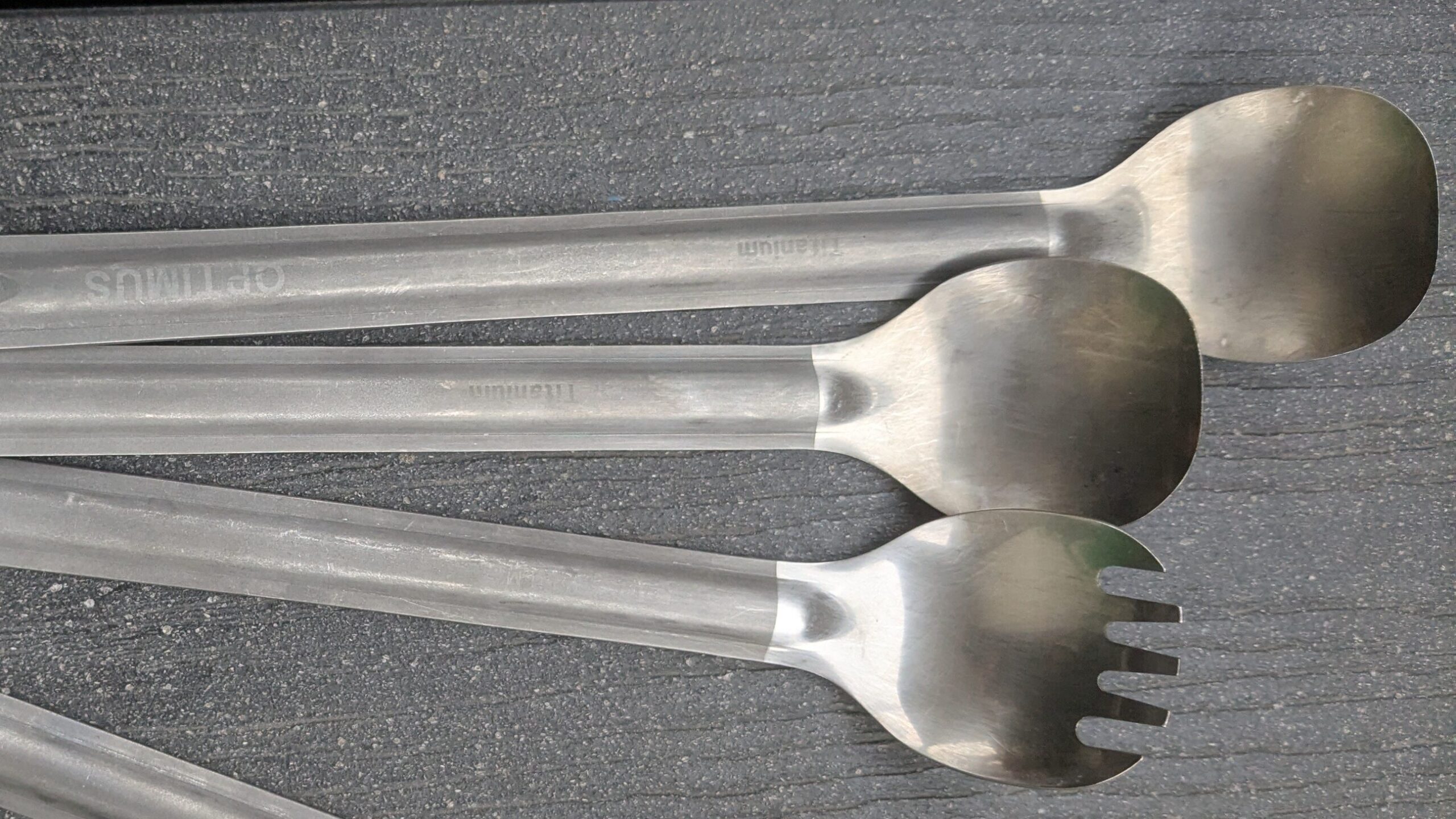
Toaks Titanium Spoons & Sporks
The long-handled utensils are particularly useful when eating directly from freeze-dried meal pouches
Water filters
Sawyer Mini filter
Our first water filter, used on several trekking trips.
It has never failed us and has always provided safe drinking water. However, its slow filtration rate makes it less convenient, particularly when filtering water for a family.
Pros:
– lightweight and compact,
– reliable and proven design,
– very long lifespan (up to 100,000 gallons / 378,000 litres),
– effective protection against bacteria and protozoa,
– easy to clean in the field with the included syringe.
– affordable and widely available.
Cons:
– slow filtration rate,
– requires squeezing water through the filter, which can be tiring,
– not very convenient when filtering water for several people,
– too slow for efficient gravity-fed filtration.
Important:
– protect the filter from freezing; if it freezes after being used, it should be considered unsafe and replaced.
The filter does not remove viruses or chemical contaminants. A cleaning syringe is included for field maintenance.
Used on
→Lofoten Long Trail
→ Tour du Mont Blanc
LifeStraw Peak Squeeze 1L Filter Bottle
A lightweight and convenient filter bottle that combines water storage and filtration in a single system.
Pros:
– integrated bottle makes filtering more convenient,
– lightweight and compact,
– effective protection against bacteria and protozoa,
– easy field maintenance with the included cleaning syringe.
Cons:
– shorter lifespan than the Sawyer Mini (up to 2,000 litres),
– still requires squeezing to filter water,
– suitable for solo hikers, but less practical for families or larger groups.
Important:
– protect the filter from freezing; freezing temperatures can damage the filter after use.
The filter does not remove viruses or chemical contaminants.
Used on
→Lofoten Long Trail
Both systems work well and give us flexibility during longer sections.
Both filters are lightweight and reliable, but neither removes viruses or chemical contaminants, as they do not contain activated carbon.
Hydration Reservoirs
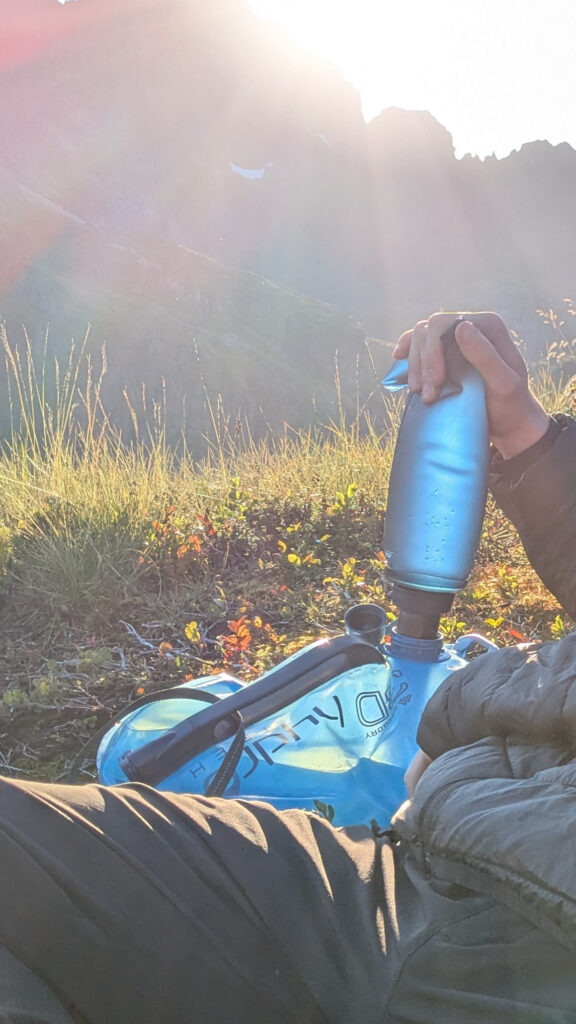
We’ve used Gregory hydration reservoirs for few years and have been very happy with them. The 3D design prevents the walls from sticking together, making them much easier to clean and dry than traditional reservoirs.
Gregory 3D Hydro Trek 3L
Our preferred reservoir for multi-day treks.
Pros:
– large capacity, suitable for longer water carries,
– dispensing valve in the cap makes it easy to fill pots and cookware at camp,
– comfortable carrying handle,
– easy to clean and dry thanks to the 3D construction,
– reservoir walls do not stick together during drying,
– durable and leak-free,
– compatible with Gregory backpack hydration systems and works well in other packs too,
– rounded shape allows it to fit comfortably in different backpack configurations..
The 3L Hydro Trek is not only useful while hiking but also works well as a water carrier around camp.
Gregory 3D Hydro 2L
A simple and reliable hydration reservoir for day hikes and shorter trips.
Pros:
– larger opening for easy filling and cleaning,
– comfortable carrying handle,
– easy to clean and dry thanks to the 3D construction,
– reservoir walls do not stick together during drying,
– durable and leak-free,
– compatible with Gregory backpack hydration systems and works well in other packs too.
A great option when you don’t need the extra capacity of the 3L Hydro Trek.
Electronics & Navigation
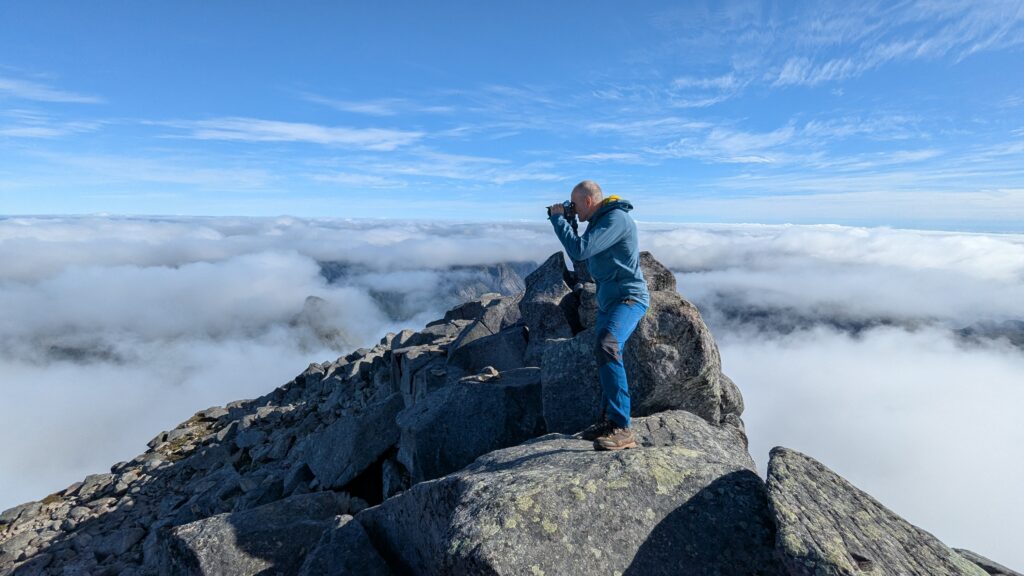
Camera setup
– Olympus OM-D E-M1 Mark I
M.Zuiko 12–40 mm f/2.8 Pro
– spare battery
– charger
– PGYTech clip
Keeps the camera always within reach while hiking, without causing discomfort or restricting movement.
Power & Charging
– power banks:
Nitecore
NB 10.000 carbon
– headlamps
Nitecore NU25
Princeton Tec Sync
Black Diamond Spot
– charging cables
– wall chargers
Navigation
SUUNTO 9 Peak Pro watch
Before the trek, we upload the route from Mapy.com to the watch and then follow the navigation directly from the wrist throughout most of the trek.
We also used the Mapy.com app on our phones as additional backup.